Europe Train Adventure: Paris, Brussels, Amsterdam In One Journey
Author:Andy
Europe by train is just the best way to travel. One minute you’re gazing at the Eiffel Tower, the next you’re wandering through Brussels’ squares, and soon enough you’re drifting along Amsterdam’s canals. Every city has its own vibe, and the trains make hopping between them way easier than you’d expect.
Here’s how to make the most of a quick trip through Paris, Brussels, and Amsterdam.
Which Trains You’ll Take and How to Book
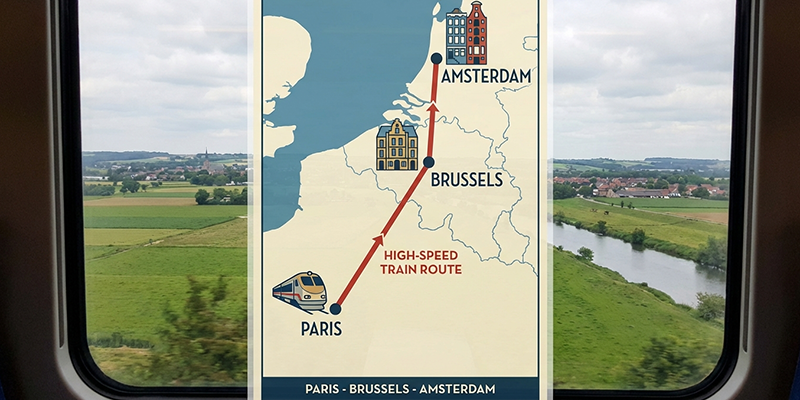
If you’re doing Paris → Brussels → Amsterdam, here’s what you need to know:
1. Paris → Brussels
Train: Mostly Thalys high‑speed trains (some of the same trains can be booked as Eurostar on certain schedules).
Where to Buy:
SNCF Connect (France official) – good prices, official source.
Thalys/Eurostar official sites also work.
Departure: Paris Gare du Nord – check the departure boards for your train number.
Seat: Seat reservation is mandatory. You must have a reserved seat on all high‑speed trains.
Typical Price & Timing: If booked early (3–4 months ahead), tickets can start around €30–€60 one‑way; closer to departure, prices jump.
2. Brussels → Amsterdam
Trains: Thalys or Eurostar high‑speed (~~1h50min).
There’s also NS International Intercity Direct trains (not as fast, usually cheaper).
Where to Buy:
NS International official site – often cheapest for IC trains.
Thalys/Eurostar official sites for high‑speed seats.
Seat Reservation: Required on high‑speed trains (Thalys / Eurostar). IC trains may not require reservations.
Prices: Early Eurostar/Thalys from Brussels → Amsterdam can be €30–€60+ one‑way; IC tickets often €20–€45 if booked early.
3. Paris ↔ Amsterdam (Direct)
Train: Eurostar direct high‑speed (~3h20).
Where to Buy: Eurostar.com (official) — choose between Standard / Plus / Premier.
Seat & Check‑In:
Seat reservation is mandatory on Eurostar.
There’s a security check (no passport control inside Schengen), so arrive ~30–40 mins early at Paris Gare du Nord.
Typical Prices: Can start €35–€60+ if booked months ahead. Prices rise quickly nearer the date.
Booking Window & Price Tips
Best Time to Book: Tickets typically go on sale 120–180 days before travel for most high‑speed trains. Booking early gives you the lowest prices and more seat options.
Dynamic Pricing: Like flights — cheap seats sell out fast, and prices rise as trains fill. Booking late (weeks or days before) often means paying significantly more.
Official Sources Only: Always use SNCF Connect, Eurostar.com, NS International or station kiosks. Third‑party sites often add hidden fees.
A Quick Summary
Paris → Brussels: Thalys or Eurostar, book months ahead.
Brussels → Amsterdam: Thalys/Eurostar or NS International (cheaper).
Paris ↔ Amsterdam: Best with Eurostar direct, book early for lowest fares.
Prices: Early €30–€60+ per leg; last‑minute can easily double.
Seat Reservation: Mandatory on all high‑speed trains.
Refunds/Changes: Only within deadlines and often with fees, especially on Eurostar.
Your First Stop: Paris
Your trip kicks off at Gare du Nord, Europe’s busiest station. The building is stunning, all neoclassical arches and grand staircases—but yes, it can feel overwhelming at first.
Day 1: Classic Paris & Le Marais
Getting Around: Pick up a Navigo Easy card (€2) and load a 10-ride carnet. It works across Metro and buses and is more reliable than paper tickets.
Sightseeing: Begin with a walk along the Seine, crossing between Île de la Cité and the Right Bank for views of Notre Dame and the bookstalls. Continue into Le Marais, stopping at Place des Vosges before wandering Rue Vieille-du-Temple and nearby side streets.
Food: Lunch at Chez Janou (classic Provençal dishes, busy but worth it). For coffee, Coutume Café or Fragments are solid choices. Dinner options nearby include Bistrot des Tournelles for traditional French plates.
Day 2: Museums & Landmarks
Morning: Visit the Louvre. Book tickets online at least two to three weeks ahead and enter via the Carrousel if available to avoid long queues. Focus on one wing rather than the whole museum.
Afternoon: Walk to Musée d’Orsay for Impressionist works by Monet, Degas, and Van Gogh. It’s more compact and easier to navigate than the Louvre.
Evening: Head toward the Eiffel Tower area. The Champ de Mars or the Trocadéro side offers classic sunset views without going up.
Food: Lunch at Le Comptoir du Relais (arrive early), dinner near the Seine at Les Ombres or a smaller bistro around Rue Cler.
Day 3: Art, Cafés & Saint-Germain
Morning: Visit the Musée Rodin, including its sculpture garden. It’s calm, walkable, and rarely feels crowded.
Afternoon: Explore Saint-Germain-des-Prés—browse Shakespeare and Company, stop by Café de Flore or Les Deux Magots, and wander side streets for independent shops.
Food: Pick up pastries from Eric Kayser or Du Pain et des Idées before heading onward.
Brussels
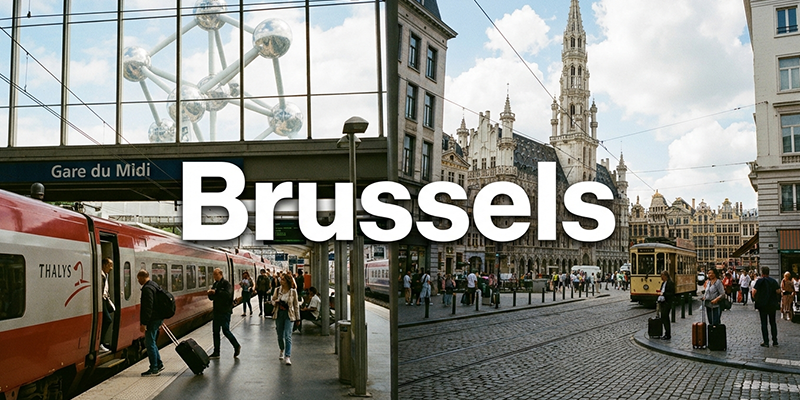
Brussels is often treated as a quick stop between Paris and Amsterdam. That’s a mistake—but it is a city that works surprisingly well in one well-planned day. Keep things compact, food-focused, and flexible, and Brussels feels relaxed rather than rushed.
Getting In: The Three-Station Trick
Most international trains arrive at Bruxelles-Midi. Don’t walk. Your Eurostar or Thalys ticket usually includes a short hop on local SNCB trains to Bruxelles-Central. Trains run every 3–5 minutes and drop you a five-minute walk from Grand Place, saving time and energy.
Morning: Old Town Without the Crowds
Start early at Grand Place, before tour groups fill the square. The gold-trimmed guild houses look best in soft morning light. From there, walk straight into the Galeries Saint-Hubert, a 19th-century covered arcade that’s perfect for a coffee stop and some low-key window shopping (chocolate shops included).
Lunch: Simple, Local, Filling
Skip tourist menus near the main square. Walk toward Sainte-Catherine for a casual lunch. Look for classics like stoemp (mashed potatoes with vegetables) or a straightforward moules-frites set. Portions are generous, and lunch pricing is usually much better than dinner.
Afternoon: Waffles, Wandering, and One Museum
Know your waffles:
Brussels waffle: rectangular, light, crisp—best eaten seated with minimal toppings.
Liège waffle: oval, dense, caramelized sugar pearls—ideal as street food, no extras needed.
Afterward, wander through the compact historic center. Brussels rewards slow walking more than checklist sightseeing.
If you want culture, choose one museum only. The Magritte Museum is a good fit—central, focused, and easy to finish in 1.5–2 hours.
Evening: Beer Without the Noise
End the day with a relaxed Belgian beer in a smaller bar. Lambics and Trappists shine in quiet settings—no need for loud pub crawls. Brussels’ beer culture is at its best when you’re not shouting over it.
Why One Day Works
Brussels isn’t about seeing everything. It’s about eating well, walking freely, and letting the city feel local. One unhurried day gives you exactly that—without leaving you feeling like you only saw the train station.
Amsterdam: The Final Frontier
Crossing into the Netherlands, the land flattens out fast—windmills, canals, wide skies. You’ll arrive at Amsterdam Centraal, a station built on three artificial islands and supported by more than 8,000 wooden piles. It’s a reminder that the entire city is engineered to exist.
Getting Around: OV-pay Made Simple
Forget the old OV-chipkaart. Public transport in Amsterdam is now contactless:
Tap your credit card, debit card, or phone (Apple Pay / Google Pay) on the yellow readers when entering and exiting trams, buses, and metro.
Important: Always tap out. If you forget, you’ll be charged a default maximum fare (usually €4–€20).
Tip: Use the same card/device all day—switching cards breaks fare tracking.
Day 1: Canals & the Historic Core
Morning: Canal Ring Walk
Start with a slow walk through the Grachtengordel (canal ring). Early morning is quiet, bikes outnumber tour groups, and the narrow houses make more sense on foot than by boat.
Lunch: Brown Cafés or Bakeries
Skip sit-down tourist lunches. Grab sandwiches, soup, or pastries near Jordaan—simple, fast, and better value.
Afternoon: Rijksmuseum
Book a timed entry in advance. Even with a Museumkaart, walk-ins aren’t allowed. Focus on highlights instead of every room; the building itself is part of the experience.
Evening: Sunset Canals
Walk or cruise near the Nine Streets area. Dusk reflections on the water are peak Amsterdam without effort.
Day 2: Museums & Neighborhood Life
Morning: Anne Frank House (If You Get In)
Tickets are released every Tuesday morning (CET) for six weeks ahead. Miss it, and chances are slim. If you don’t get tickets, walk the neighborhood anyway—it still adds context.
Afternoon: Jordaan or De Pijp
Browse small shops, local markets, and side streets. De Pijp feels younger and less polished; Jordaan feels lived-in and classic.
Evening: Casual Dining
Indonesian rijsttafel or simple Dutch comfort food works well after a long walking day.
Day 3: Amsterdam Noord (The Local Escape)
Free Ferry to the North
From the back of Centraal (IJ-zijde), take the free 24/7 ferry to Amsterdam Noord.
NDSM Wharf
Once a shipyard, now a creative zone filled with street art, open space, and repurposed buildings. Visit the STRAAT Museum (world’s largest street art museum), then relax at Pllek, a container-built café with a man-made beach.
Why It Works
No canal crowds, no pressure—just space, art, and time to slow down before moving on.
Packing and Practicalities for the Rail
To enjoy this multi-city trip, your gear needs to fit the train lifestyle.
Luggage: Go Light, Go Smart
Trains don’t weigh your bags, but space is tight.
Racks Are Small: Eurostar overhead racks are narrow. Big checked-style suitcases go at the end of the carriage—and they fill up fast.
Pro Tip: Bring a max-sized carry-on spinner and a small backpack. You can stash your bag above your seat and keep your valuables close.
Connectivity & Power
Wi-Fi: Eurostar has free Wi-Fi, but it drops out in the Belgian countryside.
Offline Maps: Download offline maps for Paris, Brussels, and Amsterdam. GPS still works underground, and it’s a lifesaver when you exit a station.
Charging: All three countries use Type C or E plugs. Older trains may only have one outlet per two seats—bring a small multi-port USB hub if you’ve got multiple devices.
The Eco Bonus
Taking the train isn’t just easier—it’s greener.
Carbon Footprint: Paris → Amsterdam by plane emits ~100 kg CO₂ per passenger; by train, it’s closer to 10 kg.
Time Factor: Airports take ~2 hours for security plus ~45 minutes to the city center. The train gets you from city-center to city-center, often faster than flying.
There is also a more detailed train travel guide for your reference.
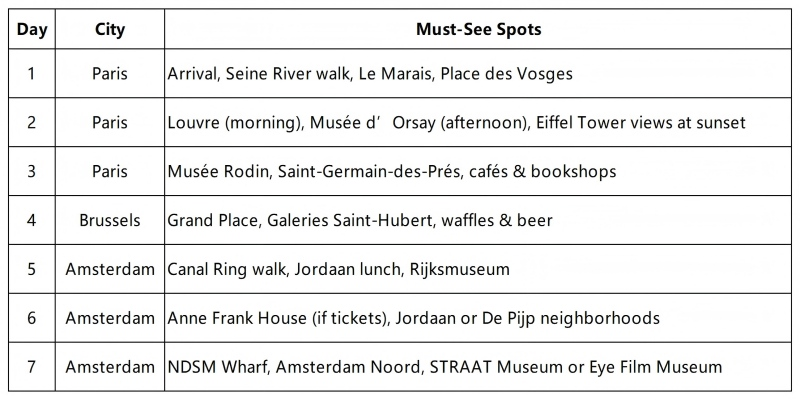
7-Day Paris–Brussels–Amsterdam Rail Itinerary
Enjoy the “In-Between” Moments
The magic of a Paris-Brussels-Amsterdam trip isn’t just in the sights—it’s in the transitions. Watching the French suburbs fade into the Ardennes, or catching that first whiff of salt air near the North Sea, gives the journey its own rhythm.
Book early, travel light, and use local transit hacks. That way, you’re not stressed about logistics, and you can soak up the unexpected moments: a perfect croissant in a quiet Paris alley, a spontaneous beer in a Brussels square, or a sunset bike ride along an Amsterdam canal. These are the memories that stick.
Latest News

5 Private Island Day Trips In The Philippines That Cost Less Than $50
March 19, 2026

Wine Tasting Tours For Relaxation And Flavorful Adventures
December 1, 2025

Travelling Alone? Avoid These Hidden Costs Singles Often Pay
November 29, 2025
5 Best Travel Booking Websites to Compare and Save Money
September 22, 2025

10 Secret Beaches Where You Can Actually Escape the Crowds
September 20, 2025
Senior Travel: The Ultimate Book on Planning Relaxing, Fun Trips
September 14, 2025